Polyethylene


Glycol
To guarantee the highest purity and efficacy, we adhere to strict global standards
To guarantee the highest purity and efficacy, we adhere to strict global standards
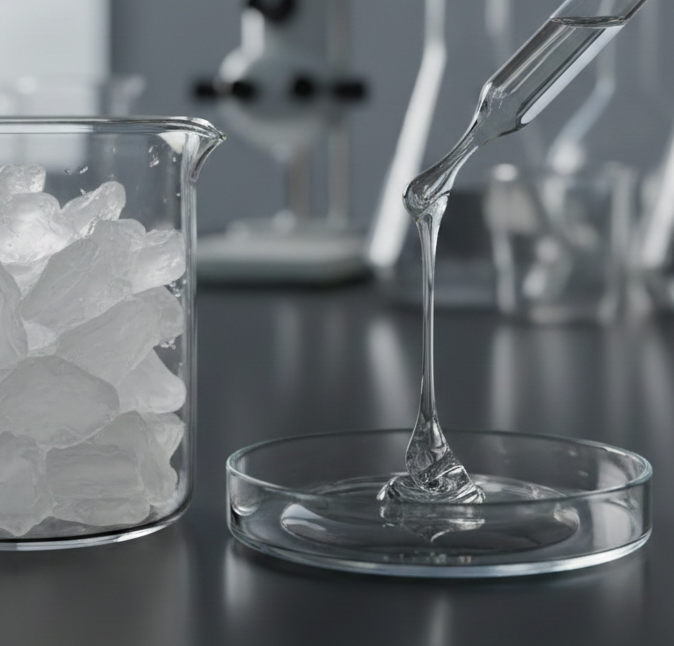
Polyethylene Glycol (PEG) is a synthetic polyether polymer and one of the most widely used hydrophilic excipients in pharmaceutical, cosmetic, and food formulations. It is characterized by its very high water solubility and excellent biocompatibility. The physical properties (viscosity, state of matter) and functional role of PEG are determined by its average molecular weight (the number listed after PEG. PEG boasts high chemical stability and low toxicity.
Solvent for APIs with low aqueous solubility.
PEG 400 (due to its liquid state and good membrane penetration).
Base for suppositories, where it melts in body fluids to release the drug.
PEG 1500 and PEG 4000 (often used as mixtures).
Solid binder or to modify the melting point of the blend in solid dispersion solutions.
PEG 4000 and PEG 6000 (as solid binders).
Water-soluble base that leaves no greasy residue.
PEG 400 to PEG 1500 (as a mixture or individually).
The product fully complies with the requirements specified in the United States Pharmacopeia (USP), the European Pharmacopoeia (EP), and/or other relevant standards.
Strict control over the Average Molecular Weight (the nominal number) and molecular weight distribution to ensure consistency in physical properties (viscosity, melting point).
Strict control over Dioxane and Formaldehyde content, which are potential impurities in PEG.
Production is conducted in a rigorous cGMP environment, ensuring consistency in physicochemical properties.